Inflammation & gut
KPV
Approved registered clients only.
Data sheet
KPV
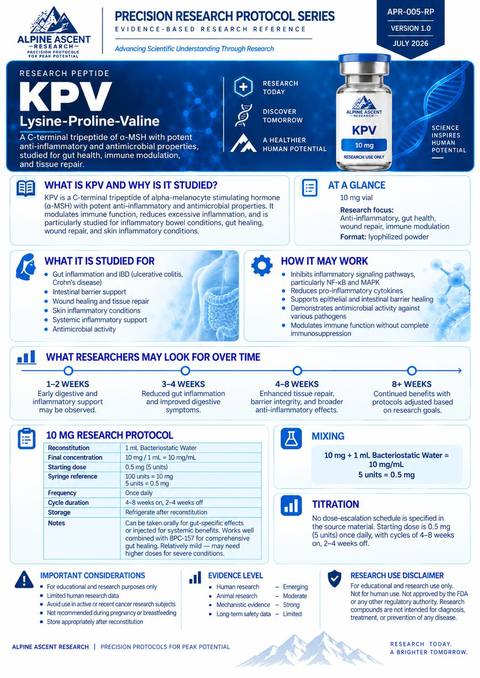
This preview is the one-page Alpine Ascent sheet for KPV. It is the reference copy for reconstitution, frequency, and the figures printed on the sheet. Open it when you want the full page.
What it is
KPV is a C-terminal tripeptide of alpha-melanocyte-stimulating hormone (α-MSH). It is studied for anti-inflammatory and antimicrobial properties. Research interest includes immune function, gut health, wound repair, and skin inflammatory conditions. It is particularly studied for inflammatory bowel conditions, gut healing, wound repair, and skin inflammatory conditions.
What researchers study it for
- Gut inflammation and inflammatory bowel research models
- Intestinal barrier support
- Wound healing and tissue repair
- Skin inflammatory conditions
- Systemic inflammatory support
- Antimicrobial activity
How it may work
- Inhibits inflammatory signaling pathways, particularly NF-κB and MAPK
- May reduce pro-inflammatory cytokines
- Supports epithelial and intestinal barrier healing
- Studied for antimicrobial activity against various pathogens
- Modulates immune function without complete immunosuppression
Research timeline
1–2 weeks
Early digestive and inflammatory responses may be observed.
3–4 weeks
Reduced gut inflammation and improved digestive symptoms may be assessed.
4–8 weeks
Enhanced tissue repair, barrier integrity, and broader anti-inflammatory effects.
8+ weeks
Continued observations, with protocols adjusted based on research goals.
10 mg research protocol
- Reconstitution
- 1 mL bacteriostatic water
- Final concentration
- 10 mg/mL
- Starting dose
- 250–500 mcg once daily
- Syringe reference
- 5 units = 0.5 mg (500 mcg)
- Frequency
- Once daily
- Cycle duration
- 4–8 weeks, or 2–4 weeks off between cycles
- Storage
- Refrigerate after reconstitution
- Notes
- The sheet notes it can be taken orally for gut-specific effects or injected for systemic effects, and that it is sometimes studied with BPC-157.
Research duration on the sheet: 4–8 weeks, with 2–4 weeks off, as listed on the sheet.
Reconstitution
- 10 mg + 1 mL bacteriostatic water = 10 mg/mL.
- 5 units = 0.5 mg.
Titration notes
- No dose-escalation schedule is specified.
- Starting dose on the sheet is 250–500 mcg (5 units at the top of that range) once daily.
Important considerations
- For educational and research purposes only.
- Limited human-research data.
- Avoid use in active or recent cancer research subjects.
- Not recommended during pregnancy or breastfeeding.
- Store appropriately after reconstitution.
Evidence summary
- Human research
- Emerging
- Animal research
- Moderate
- Mechanistic evidence
- Strong
- Long-term safety data
- Limited
References
Completed published studies are listed below and labeled as in vitro, animal, or human research. Favorable and unfavorable results are both included, including cancer studies. This is not every paper on the compound, and it is not a recommendation or a dose.
The colitis report and the colon-cancer report are both in mice. A completed human cancer trial of KPV was not identified.
- KPV has anti-inflammatory potential in murine models of inflammatory bowel diseaseAnimal
Mice with experimental colitis regained weight sooner and had less colon inflammation after KPV.
- KPV and colitis-associated colon cancer in miceAnimal
Mice given a carcinogen and an inflammatory colon injury. KPV in the drinking water reduced tumor number, size, and burden. Mice lacking the PepT1 transporter did not get that protection.
Available strength
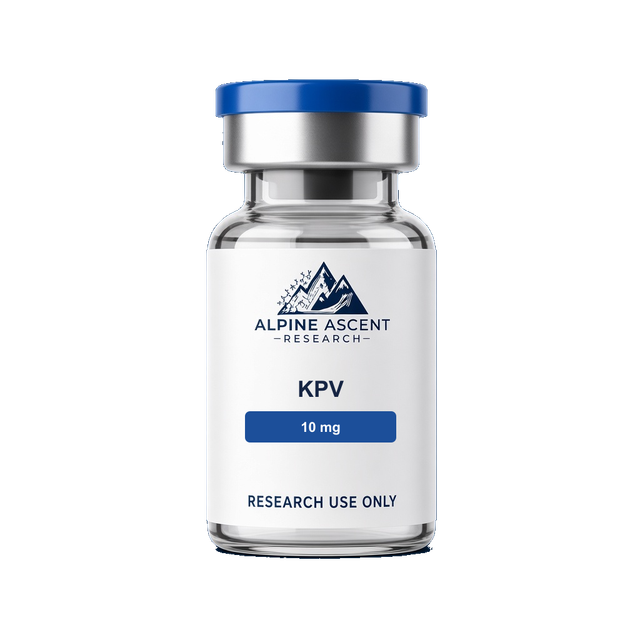
10 mg vial. Format: Lyophilized powder.
For educational and research purposes only. These materials are not approved to diagnose, treat, cure, or prevent any disease. Nothing on this page is a dose recommendation or medical advice. The Alpine Ascent data sheet is the reference copy for each compound.