Cellular energy
NAD+
Approved registered clients only.
Data sheet
NAD+
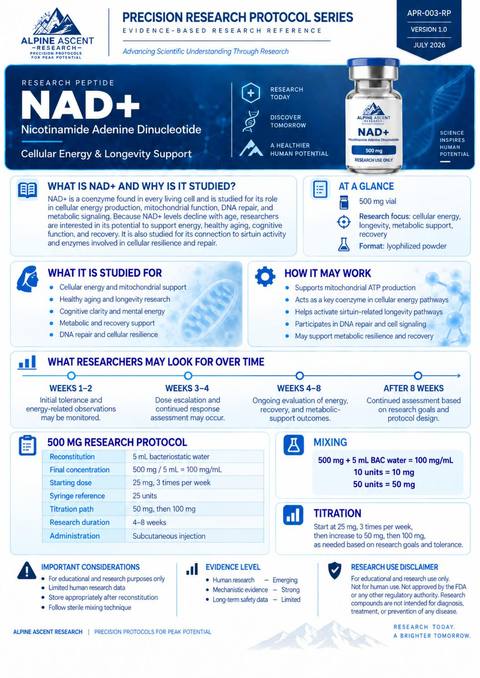
This preview is the one-page Alpine Ascent sheet for NAD+. It is the reference copy for reconstitution, frequency, and the figures printed on the sheet. Open it when you want the full page.
What it is
NAD+ is a coenzyme found in every living cell and is studied for its role in cellular energy production, mitochondrial function, DNA repair, and metabolic signaling. Because NAD+ levels decline with age, researchers are interested in its potential to support energy, healthy aging, cognitive function, and recovery. It is also studied for its connection to sirtuin activity and enzymes involved in cellular resilience and repair.
What researchers study it for
- Cellular energy and mitochondrial support
- Healthy aging and longevity research
- Cognitive clarity and mental energy
- Metabolic and recovery support
- DNA repair and cellular resilience
How it may work
- Supports mitochondrial ATP production
- Acts as a key coenzyme in cellular energy pathways
- Helps activate sirtuin-related longevity pathways
- Participates in DNA repair and cell signaling
- May support metabolic resilience and recovery
Research timeline
Weeks 1–2
Initial tolerance and energy-related observations may be monitored.
Weeks 3–4
Dose escalation and continued response assessment may occur.
Weeks 4–8
Ongoing evaluation of energy, recovery, and metabolic-support outcomes.
After 8 weeks
Continued assessment based on research goals and protocol design.
500 mg research protocol
- Reconstitution
- 5 mL bacteriostatic water
- Final concentration
- 100 mg/mL
- Starting dose
- 25 mg, 3 times per week
- Syringe reference
- 10 units = 10 mg; 25 units = 25 mg; 50 units = 50 mg
- Titration path
- 25 mg, then 50 mg, then 100 mg
- Research duration
- 4–8 weeks
- Administration
- Subcutaneous injection
Research duration on the sheet: 4–8 weeks on the source sheet, with continued assessment after 8 weeks.
Reconstitution
- 500 mg + 5 mL bacteriostatic water = 100 mg/mL.
- 10 units = 10 mg. 50 units = 50 mg.
Titration notes
- Start at 25 mg, 3 times per week, then increase to 50 mg, then 100 mg, as needed based on research goals and tolerance.
Important considerations
- For educational and research purposes only.
- Limited human-research data.
- Store appropriately after reconstitution.
- Follow sterile mixing technique.
Evidence summary
- Human research
- Emerging
- Mechanistic evidence
- Strong
- Long-term safety data
- Limited
References
Completed published studies are listed below and labeled as in vitro, animal, or human research. Favorable and unfavorable results are both included, including cancer studies. This is not every paper on the compound, and it is not a recommendation or a dose.
A completed trial of NAD+ itself, given as an injection, was not identified. The study below used a precursor that raised NAD+. A completed cancer study of NAD+ itself was not identified.
- Chronic nicotinamide riboside supplementation elevates NAD+ in healthy middle-aged and older adultsHuman
Healthy adults, ages 55 to 79. Six weeks of the NAD+ precursor nicotinamide riboside raised blood-cell NAD+ and was tolerated.
Available strength
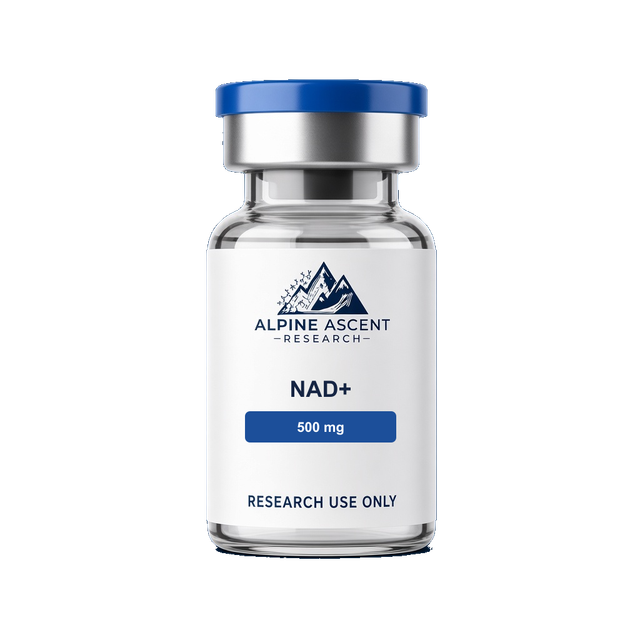
500 mg vial. Format: Lyophilized powder.
For educational and research purposes only. These materials are not approved to diagnose, treat, cure, or prevent any disease. Nothing on this page is a dose recommendation or medical advice. The Alpine Ascent data sheet is the reference copy for each compound.