Metabolic & hormonal
Tesamorelin
Approved registered clients only.
Data sheet
Tesamorelin
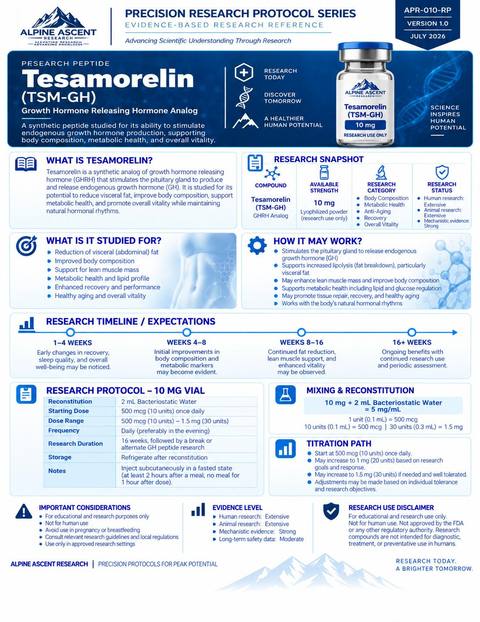
This preview is the one-page Alpine Ascent sheet for Tesamorelin. It is the reference copy for reconstitution, frequency, and the figures printed on the sheet. Open it when you want the full page.
What it is
Tesamorelin is a synthetic analog of growth-hormone releasing hormone (GHRH). It stimulates the pituitary gland to produce and release endogenous growth hormone (GH). It is studied for its potential to reduce visceral fat, support body composition, support metabolic health, and promote overall vitality while maintaining natural hormonal rhythms.
What researchers study it for
- Reduction of visceral (abdominal) fat
- Improved body composition
- Support for lean muscle mass
- Metabolic health and lipid profile
- Recovery and performance research
- Healthy aging and overall vitality
How it may work
- Stimulates the pituitary gland to release endogenous growth hormone (GH)
- GH influences IGF-1, which is studied in recovery, particularly visceral fat
- May support lean muscle mass and fat breakdown pathways
- Supports metabolic health, including lipid and glucose regulation
- May promote tissue repair, recovery, and vitality
- Works with the body's natural hormonal rhythms
Research timeline
1–4 weeks
Early changes in recovery, sleep quality, and overall well-being may be noticed.
Weeks 4–8
Visible improvements in body composition and metabolic markers may emerge.
Weeks 8–16
Continued fat reduction, lean muscle support, and enhanced vitality may be observed.
16+ weeks
Ongoing benefits, with continued research use and periodic assessment. The sheet describes a break or a switch to alternate GH-peptide research after 16 weeks.
10 mg research protocol
- Reconstitution
- 2 mL bacteriostatic water
- Final concentration
- 5 mg/mL
- Starting dose
- 500 mcg (10 units) once daily
- Dose range
- 500 mcg (10 units) to 1.5 mg (30 units)
- Frequency
- Daily, preferably in the evening
- Research duration
- 16 weeks, followed by a break or alternate GH-peptide research
- Administration
- Subcutaneous, in a fasted state at least 90 minutes after a meal, with no meal for 1 hour after the dose
- Storage
- Refrigerate after reconstitution
Research duration on the sheet: 16 weeks, then a break or a change in GH-peptide research, as described on the sheet.
Reconstitution
- 10 mg + 2 mL bacteriostatic water = 5 mg/mL.
- 1 unit (0.1 mL) = 500 mcg. 10 units = 500 mcg. 30 units (0.3 mL) = 1.5 mg.
Titration notes
- Start at 500 mcg (10 units) once daily.
- May increase to 1 mg (20 units) based on research goals and response.
- May increase to 1.5 mg (30 units) if needed and well tolerated.
Important considerations
- For educational and research purposes only.
- Not for human use.
- Avoid use in pregnancy or breastfeeding.
- Consult research-ethics guidelines and local regulations.
- Use only in approved research settings.
Evidence summary
- Human research
- Extensive
- Animal research
- Extensive
- Mechanistic evidence
- Strong
- Long-term safety data
- Moderate
References
Completed published studies are listed below and labeled as in vitro, animal, or human research. Favorable and unfavorable results are both included, including cancer studies. This is not every paper on the compound, and it is not a recommendation or a dose.
A completed cancer study of this compound was not identified.
- Metabolic effects of a growth hormone-releasing factor in patients with HIVHuman
Adults with HIV and abdominal fat. Daily tesamorelin for 26 weeks reduced visceral fat and improved triglycerides compared with placebo.
- Pooled phase 3 trials of tesamorelin for excess abdominal fat in HIVHuman
Two placebo-controlled trials, 806 adults. Visceral fat fell about 15% at 26 weeks, without a matching loss of subcutaneous fat.
Available strength
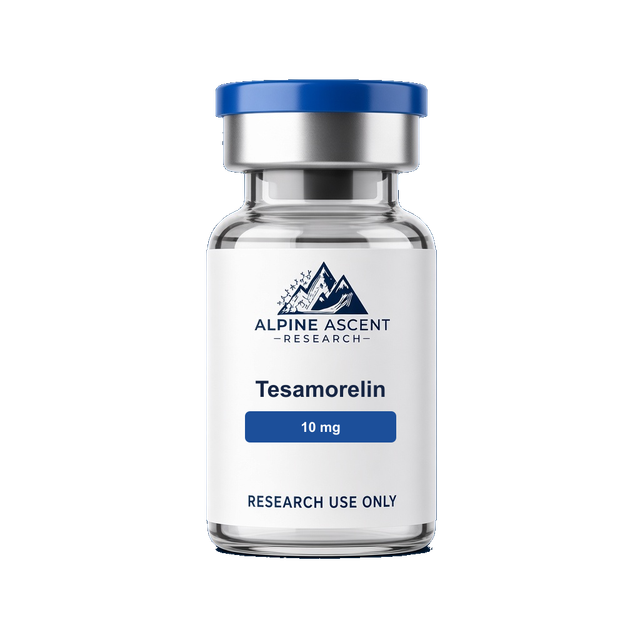
10 mg vial. Format: Lyophilized powder.
For educational and research purposes only. These materials are not approved to diagnose, treat, cure, or prevent any disease. Nothing on this page is a dose recommendation or medical advice. The Alpine Ascent data sheet is the reference copy for each compound.